

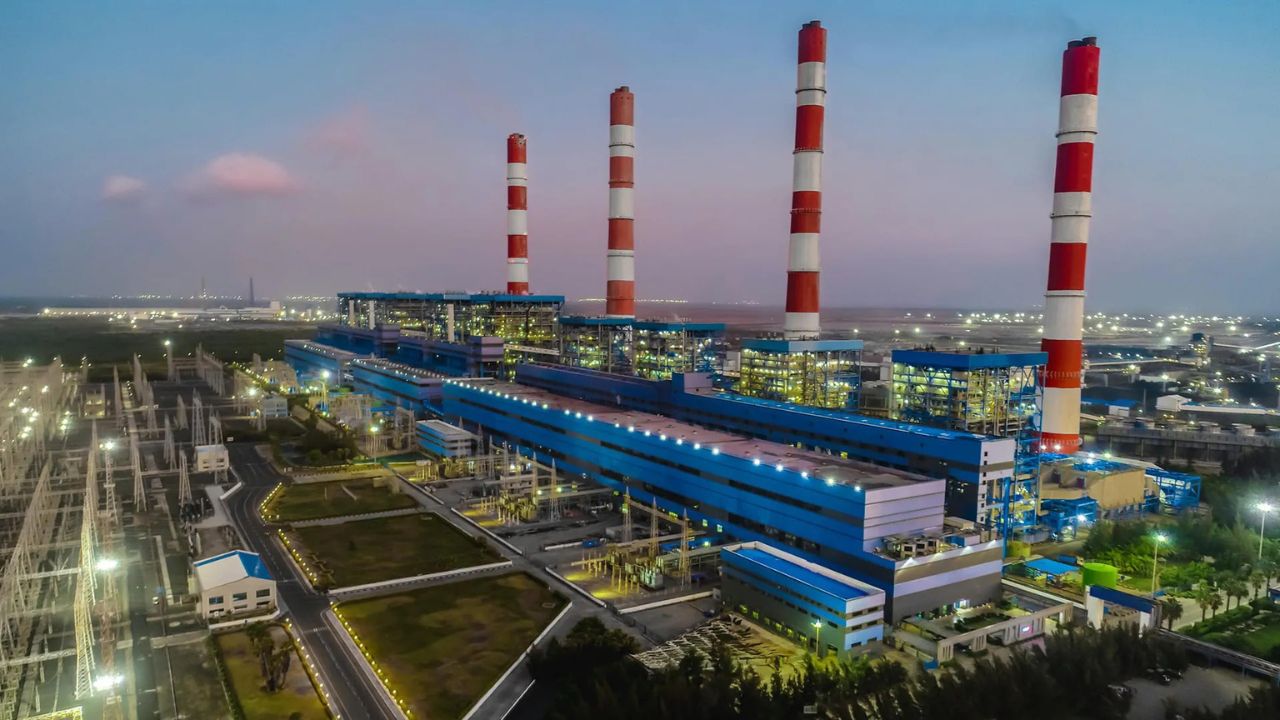
Record electricity generation of 105 billion units in FY2025-26 helped Adani Power Limited post a 64 per cent year-on-year rise in consolidated net profit in the fourth quarter ended March 31, the company disclosed on Wednesday.
According to an Adani press release on Thursday, higher revenue, improved operational efficiency and a significant decline in tax expenses supported the performance.

Profit after tax rose to about $447.77 million from $272.48 million in the previous year.

Revenue increased 10 per cent to $1.676 billion from $1.524 billion, while earnings before interest, taxes, depreciation and amortisation (EBITDA) rose 27 per cent to $681.27 million.
For the full year, net profit increased to $1.359 billion from $1.336 billion.
Total power sales grew 3.4 per cent to 99.15 billion units from 95.88 billion units.
In Bangladesh, electricity supplied from two units of the company’s 1,600 megawatt plant in Jharkhand contributes around 10 per cent of the national supply and supports grid stability.
One unit went offline on April 22 due to a mechanical fault, causing supply shortages in northern regions, particularly Rajshahi and Rangpur, where load shedding reached 10 to 11 hours in some areas.
The unit was restored on April 27, within five days.
Despite long-standing outstanding dues from the Bangladesh Power Development Board (BPDB), the company has continued supplying power to support domestic generation shortfalls.
In India, overall electricity demand rose 0.8 per cent to 1,709 billion units during the year.
Peak demand stood at 243 gigawatts, compared with 250 gigawatts in the previous year.
The average market price in the power exchange declined 13.7 per cent to around $0.040 per kilowatt-hour, reflecting rising renewable energy share and weather-related demand volatility.
“Energy security and sovereignty have become critical as global fuel markets face shocks,” said Adani Power CEO SB Khyalia.
“Thermal power continues to play a vital role in stabilising the grid and meeting peak demand as India advances towards renewable targets,” he added.
The company secured a 25-year contract under a design, build, finance, own and operate model to supply 1,600 megawatts to Maharashtra State Electricity Distribution Company Limited.
Its subsidiary Moxie Power Generation Limited signed a five-year agreement to supply 558 megawatts to Tamil Nadu’s power distribution company.
About 95 per cent of operational capacity is now tied to long- and medium-term power purchase agreements, with total contracted capacity reaching 13.3 gigawatts, including 10.4 gigawatts secured in FY2025-26.
Expansion projects aimed at reaching 23.7 gigawatts capacity by 2032 are progressing, with Mahaan Phase II 86 per cent complete, Raipur Phase II 54 per cent, and Raigarh Phase II 47 per cent.
The second phase of the 1,320 megawatt Korba Power Limited project is expected to be commissioned in FY2026-27.
Adani Power is India’s largest private thermal power producer, with 18,110 megawatts of installed capacity across 12 plants and a 40 megawatt solar facility in Gujarat.
