

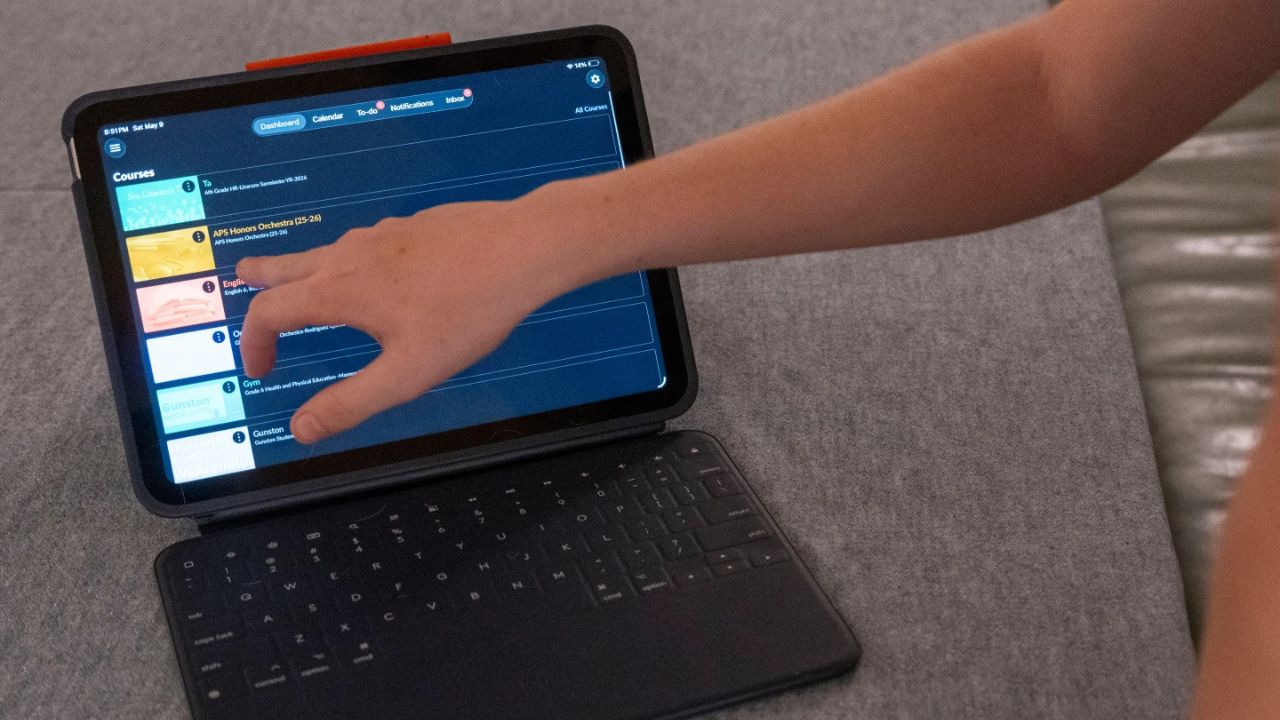
Just a few years ago, America’s public schools were rushing to put a laptop in every child’s hand. Now, after pouring billions into digital devices, a growing number of parents, teachers and school districts are saying it is time to scale back.
“The Chromebook is just a world of distraction,” said Anna Soffer, a 6th-grade teacher in Los Angeles. “Every day, I’m battling: ‘Who would you rather listen to, Ms Soffer or Minecraft?’”

The Los Angeles Unified School District recently became the first major district to stop giving devices to its youngest students. A new screen-time policy, taking effect in the fall, will eliminate devices until second grade, set daily and weekly screen limits for all higher grades, block YouTube on school devices, and ban device use during lunch and recess in elementary and middle school.

The district will also audit its edtech contracts, which the teachers’ union estimates at $1.6 billion.

In Los Angeles, concerned parents formed a group called Schools Beyond Screens and pressured the district through board meetings, social media, and private talks with administrators.

Katie Pace, a mother of three, said she limits screens at home — no screen time during the week, no phones for her 8th-grade daughter. But Clementine gets on a Wi-Fi-enabled school bus, watches YouTube on her school Chromebook, and spends hours streaming music and watching makeup tutorials.
“My daughter went to middle school and was sent home with a screen addiction in her backpack,” Pace said.
The push to close the “digital divide” accelerated during COVID-19. When the 2021-2022 school year started, 96% of US public schools had given digital devices to students who needed them, according to the National Center for Education Statistics.
“During the pandemic, getting kids devices was a lifeline. Now, it’s time that we reset,” said Nick Melvoin, the LAUSD board member who drafted the new resolution. He estimates few LA classrooms use screens effectively, with teachers using apps “as a crutch.”
Fresno Unified School District is spending $4 million a year to repair laptops. It has told its 40,000 elementary students to return take-home devices and will shift to in-class access only.
Simi Valley Unified stopped sending devices home for younger students partly due to costly repairs and “inappropriate Google searches.”
At least 14 states have proposed laws to limit screen time in schools. The federal government recently warned that excessive screen use among youths is a growing public health concern.
Parents demand opt-out option
In Arlington, Virginia, parents gathered recently to share struggles with screen addiction. “None of us are Luddites. I know technology adds value, but I also don’t want my son on YouTube all the time,” said LuAnn Oliver.
After a three-hour meeting, parents made a plan to approach their school with a unified request: “opt-out of technology and opt-in to textbooks and paper.”
“Ten years from now,” said mother Kristina Jackson, “I can’t imagine us looking back with any other reaction than: How could we have been so naive that we just handed these devices to our kids?”
